
%20(1).svg)

Introducing our new Intro to ML course!
Updated on
March 22, 2026
The Inspiration
In a world in which algorithms decide what video we watch next or how much a house is worth, understanding Machine Learning (ML) is not simply for computer scientists; it has become a new form of literacy, necessary for everyone. But what exactly is intelligence? The term has many definitions, encompassing problem-solving, learning abilities, creativity, and emotional cognition. One common definition is “the ability to solve complex problems or make decisions with outcomes benefiting the actor” (John Hopkins Medicine). Understanding the meaning of intelligence is important, especially as machine learning continues to advance and assumes roles traditionally held by humans.
To help bridge the gap between simply using technology and truly understanding it, I am pleased to introduce “Introduction to Machine Learning.” This course, designed for ages 8 and up, offers a clear and interesting approach to exploring the technology that increasingly affects our daily lives. This course is part of a growing educational community that has helped over 11,500 students through more than 130 programs and 35 curricula, with over 700 volunteers who have contributed more than 6,000 hours. By joining this community, students in the “Introduction to Machine Learning” course can explore new technologies in a supportive, structured environment.
The Very Beginnings
The course opens with a fundamental question: Why do we need machine learning? To answer this, we first revisit why we use technology in the first place. Students learn that technology’s main purpose is to help humans overcome their limitations. However, most traditional technologies rely on clear, step-by-step instructions, which limit what they can do. For instance, while a computer programmed with simple rules can easily follow commands such as “Stop at a red light,” it struggles with more complex, real-world tasks such as recommending what music a listener might enjoy next. By showing students that machine learning is about identifying patterns instead of just following rules, we highlight why machine learning matters and help them see computers as “learners,” not just machines obeying instructions. As computers become more capable, approaching human-like intelligence, this new perspective will be increasingly valuable, since machine learning will enable computers to perform tasks at a level similar to humans.
Interactive Learning
To make abstract concepts such as "Training Data" and "Labels" easily understandable to a broad audience, engaging activities created to foster curiosity are used throughout the course:
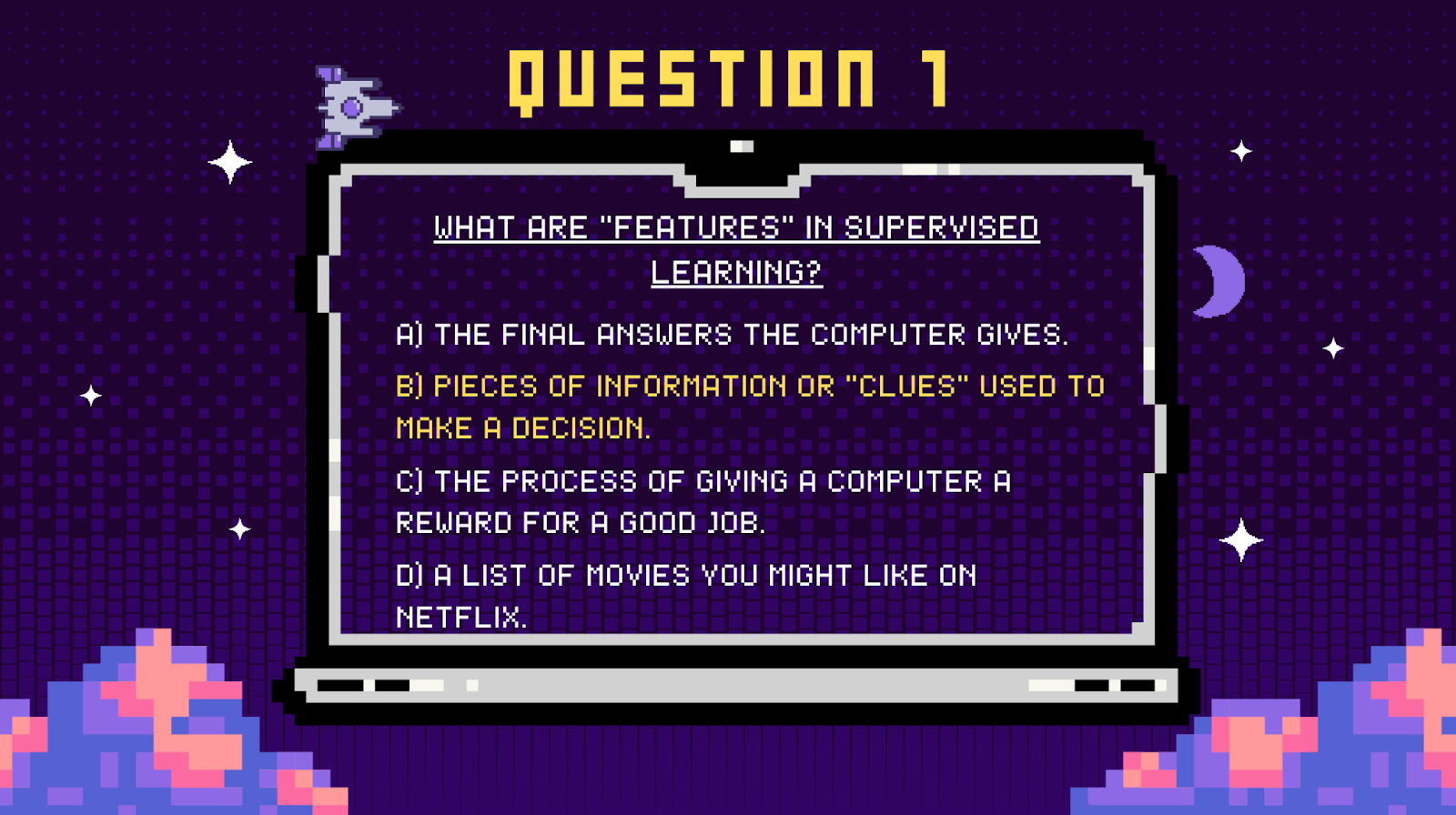
- The Chihuahua vs. Muffin Challenge: Using the famous visual meme, students are taught about Feature Handling. If a computer only looks for "dark spots on a tan background," it can easily mistake a blueberry muffin for a puppy. This teaches students to be "smart" about the clues (features) computers are given to learn a pattern for assigning a label (answer).

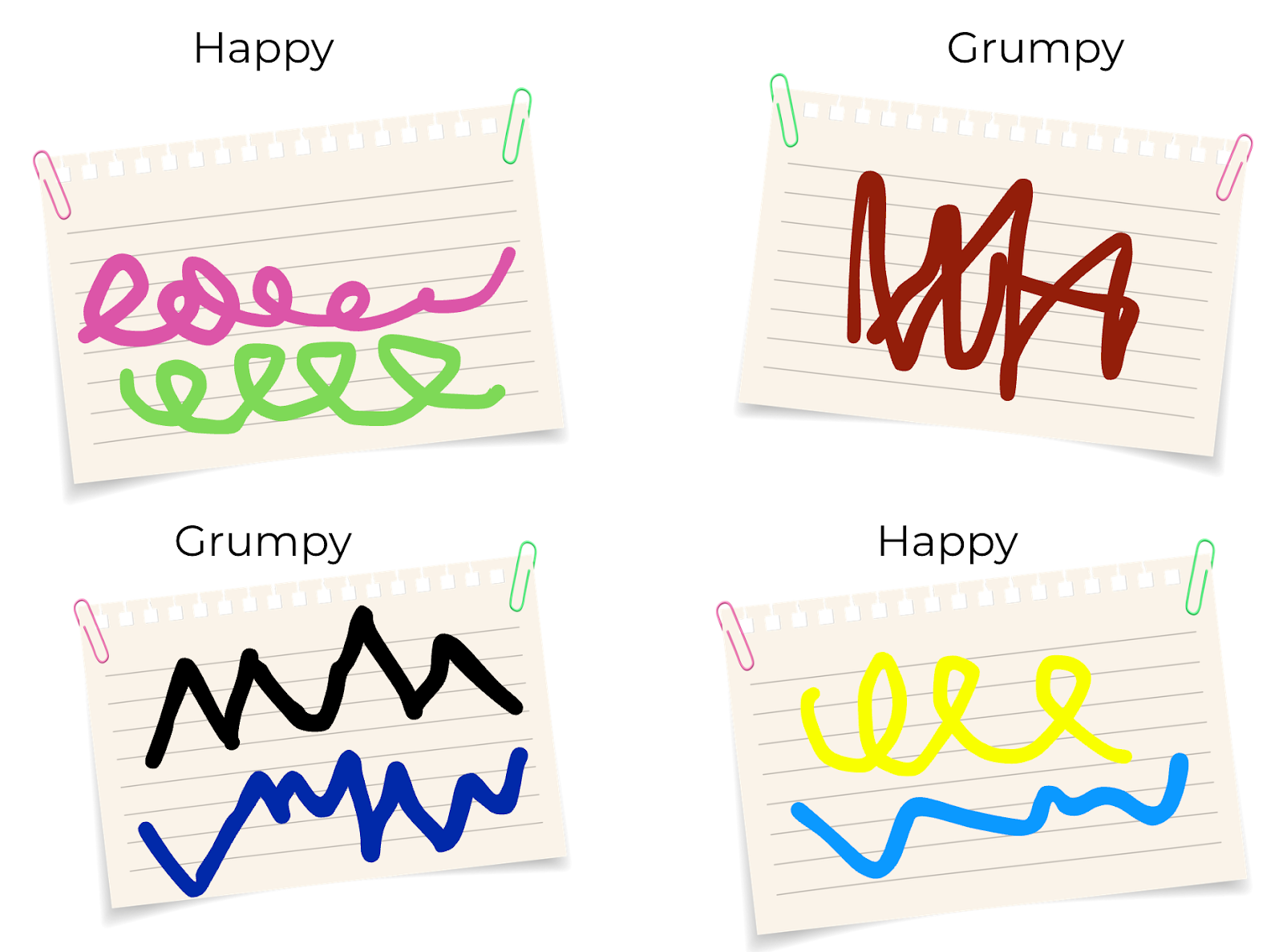
- The Secret Alien Decoder: In this exercise, students act as the ML model itself. They analyze "Training Data" (old alien messages) to observe patterns in shapes and colors, then take the "Final Exam" (Testing Data) to predict whether a new alien message is happy or grumpy.
- The "Fish Rule": To maintain a respectful and engaging environment, a simple rule is implemented: students can only share during a game if they are holding the "Fish".
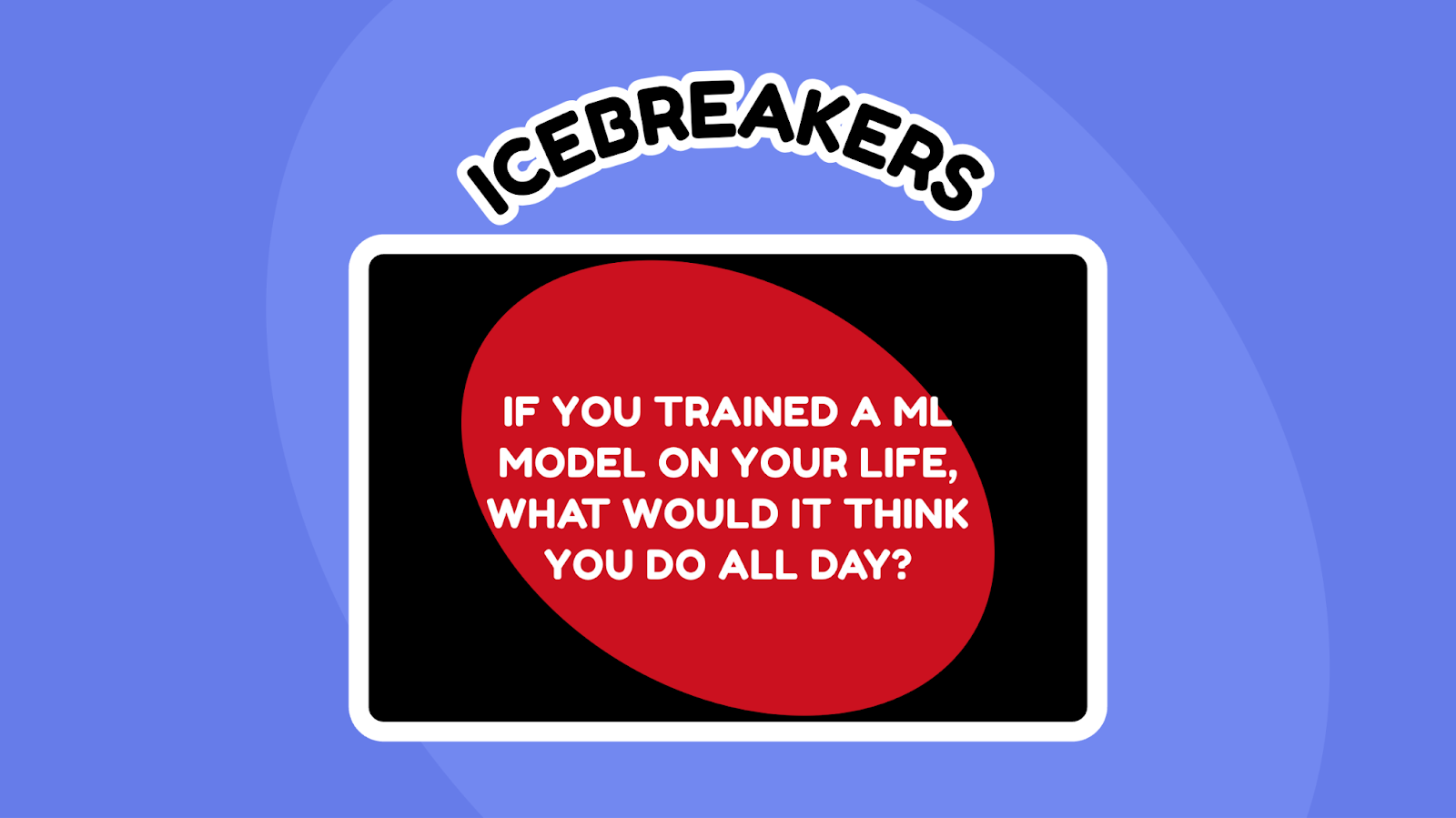
- Game Times and Icebreakers: Throughout the course, brief “Game Times” and Icebreakers are included to recap content in a particular section and help students become familiar with the classroom setting and the topic.
Ethics and Bias
In addition to discussing building machine learning models, the course also discusses the responsibility of building them. A key takeaway for my students is the "Garbage In, Garbage Out" principle: if we give a computer biased or unfair data, it will produce unfair results. Real-world examples, such as how a phone's facial recognition might fail if it were trained only on certain types of faces, are also explored to highlight the ethics of using machine learning models for everyday problems and how bias can affect the ethics.
Future STEM Leaders
By the end of the course, students can analyze, critique, and design AI systems. Furthermore, they can explain how ML is applied to interdisciplinary domains such as medicine, climate science, language translation, and more. The goal of the course is to help them understand both the strengths and limits of machine learning, so they are prepared to guide technological innovation responsibly as future leaders of STEM.
To view the course go here: https://www.stemforothers.org/curriculum/introduction-to-ml

%20(1).svg)

.jpeg)