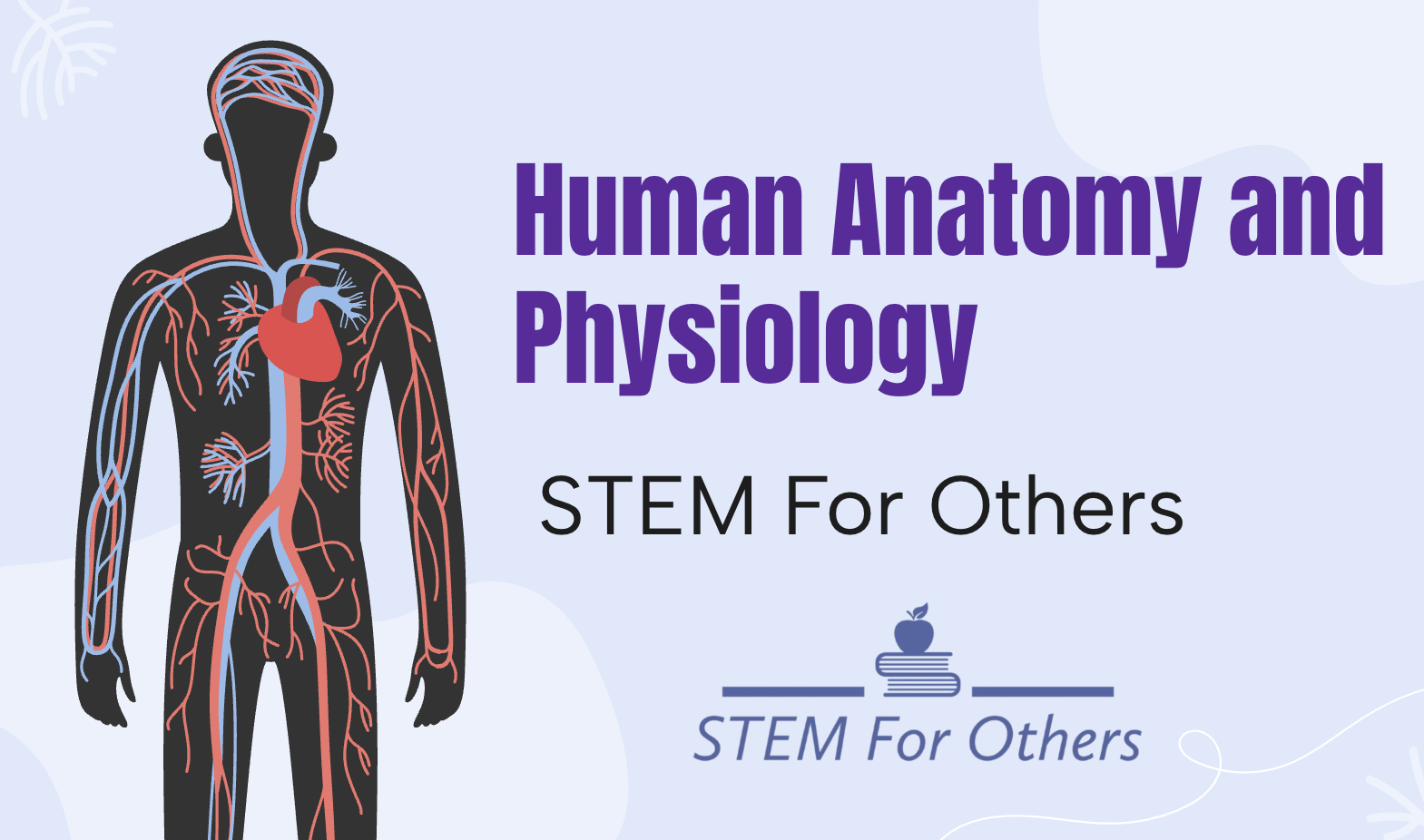
Intro to Human Anatomy
Phase 1: The Building Blocks (Units 1–4) Unit 1: The Body's Blueprint. We start with the levels of structure, from atoms all the way up to
the organism, and learn the "map language" doctors and anatomists use to describe the body:
anterior, posterior, medial, lateral, and the planes that slice it into sections. You'll also meet
homeostasis, the body's constant balancing act, and see how feedback loops keep everything
from your blood sugar to your body temperature in check. Unit 2: Life at the Cellular Level. Zoom into the cell itself. You'll meet the organelles that keep it
running (mitochondria, ribosomes, the nucleus) and learn how molecules move in and out of
cells through diffusion, osmosis, and active transport. Then you'll see how individual cells
organize into the four basic tissue types that build everything else in the body. Unit 3: Your Body's Outer Shield. The skin isn't just a wrapper, it's a full organ system. You'll
explore the five layers of the epidermis, the sensors that let you feel a light touch versus deep
pressure, and how your skin regulates temperature and even helps make Vitamin D. Unit 4: Frame and Force. Discover how bones are living, constantly rebuilding tissue thanks to a
crew of specialized cells, and how the three types of muscle work together to move your body.
You'll dig into the sliding filament theory to see exactly how a nerve signal turns into a muscle
contraction. Phase 2: The Control and Processing Systems (Units 5–8) Unit 5: Wired for Communication. Explore the nervous system's command structure, the CNS
and PNS, and trace a signal from a neuron's dendrites to its axon. You'll also learn the
tug-of-war between your sympathetic "fight or flight" and parasympathetic "rest and digest"
responses. Unit 6: The Body's Chemical Messengers. Where nerves are fast and local, hormones are slow
and global. You'll learn how glands like the hypothalamus, pituitary, thyroid, and adrenals talk to
the rest of the body, and see negative feedback in action through blood glucose regulation. Unit 7: Fuel Processing. Follow a meal on its full journey, from mechanical and chemical
digestion in the mouth and stomach to nutrient absorption in the small intestine, plus the
accessory organs (liver and pancreas) that make it all possible. Unit 8: Breath by Breath. Learn the mechanics behind every inhale and exhale, how pressure
changes driven by your diaphragm pull air into your lungs, and how oxygen and carbon dioxide
swap places across the paper-thin walls of your alveoli.
Phase 3: Circulation, Defense, and the Body's Full Circle (Units 9–12) Unit 9: The Cardiovascular System. See how your heart and blood vessels form a closed loop,
delivering oxygen and nutrients to every cell in your body and hauling waste away. Unit 10: The Lymphatic/Immune System. Discover the body's defense network, how it filters out
threats and helps you recover from illness and injury. Unit 11: The Urinary System. Learn how your kidneys filter blood, balance fluids, and keep your
internal chemistry stable. Unit 12: The Reproductive System. Wrap up the course by exploring the systems responsible
for growth, development, and the continuation of life.
By the end, you won't just know body parts, you'll understand how they all work together as one
connected system. Ready to see how you actually work? Let's get started!